
|
Quantity
|
Total
|
||
|
|
|||
|
|
|||
Crayfish farming equipment for small systems and commercial farms
Successful crayfish farming requires more than a suitable tank. The tanks, water circulation, solids removal, biological filtration, aeration and environmental controls must operate as one coordinated system. Crayfish farming equipment should therefore be selected according to the species, production stage, planned biomass, feeding rate, water source, temperature requirements and intended scale of the operation.
This category brings together CrawTec equipment for different stages of crayfish production. The range includes crayfish farming tanks, ready-to-use RAS modules, drum filters, biological filters, hatchery equipment and other components required to build or upgrade a controlled aquaculture system. Customers can select an individual unit for an existing installation or combine several products into a complete solution for a new crayfish farm.
What equipment is needed for crayfish farming?
The exact configuration depends on whether the system is intended for broodstock, reproduction, juvenile rearing, grow-out or temporary holding. A crayfish farm may require:
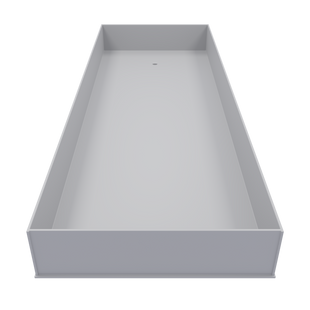
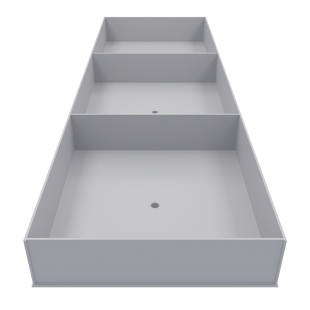
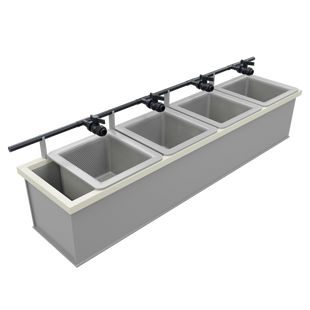
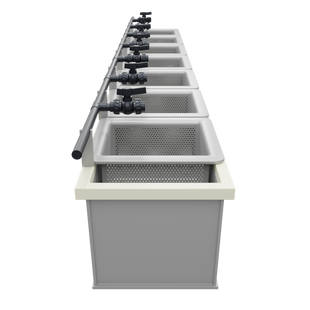
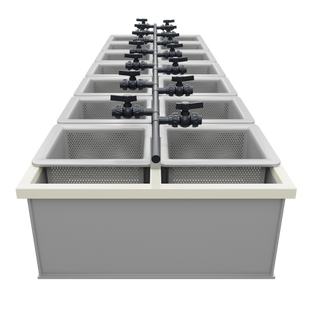
- crayfish tanks and trays for broodstock, berried females, juveniles and market-size animals;
- mechanical filtration for removing uneaten feed, faeces and suspended solids;
- biological filtration for processing dissolved nitrogen compounds;
- circulation pumps for moving water between tanks and treatment units;
- aeration or oxygenation equipment for maintaining an appropriate dissolved oxygen level;
- heating or cooling equipment when the selected species and production model require temperature control;
- hatchery and breeding equipment for broodstock management, reproduction and juvenile production;
- complete RAS modules that combine the main water-treatment components in one integrated system.
Not every operation needs the same set of equipment. A small broodstock or trial system has different requirements from a commercial farm covering reproduction, juvenile rearing and continuous grow-out. The equipment package should reflect the actual production process rather than a standard list of components.
Crayfish farming tanks and production layout
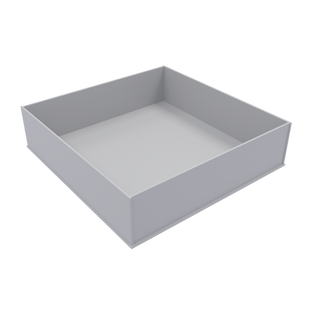
Crayfish tanks form the physical basis of an indoor or controlled farming system, but volume alone is not enough to determine whether a tank is suitable. Floor area, water depth, hydraulic layout, drainage, ease of cleaning and the possibility of installing shelters are equally important.
Different production groups may need to be kept in separate tanks. Broodstock, berried females, juveniles and market-size crayfish place different demands on available space, feeding and daily management. Separating these groups makes it easier to control stocking density, grading, hygiene and feeding.
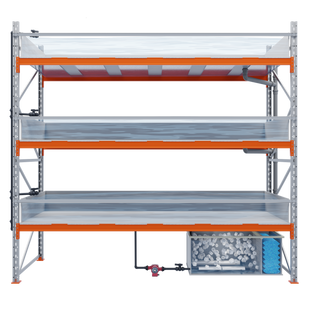
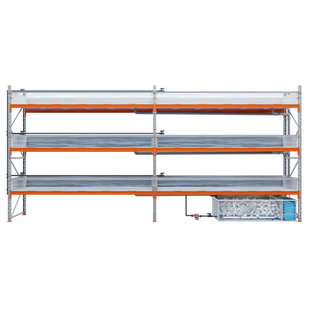
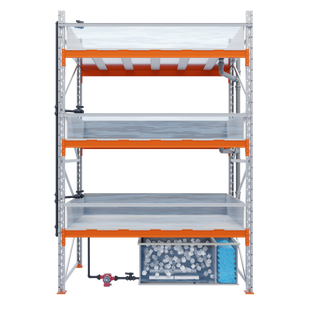
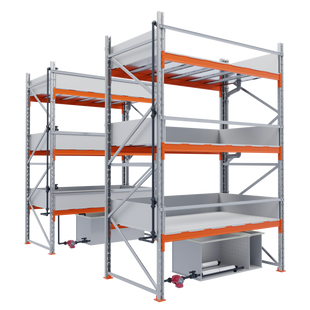
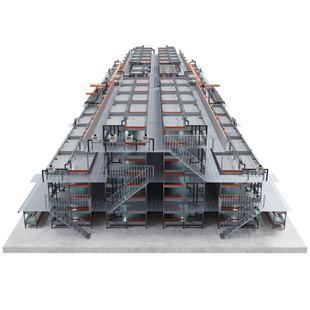
Multi-level or rack-based tank systems can increase the usable production area inside a building. However, they require even water distribution, reliable drainage, safe structural support and convenient access to every level. A layout that increases tank capacity but makes inspection and cleaning difficult can increase labour requirements and operational risk.
The number and volume of tanks must also match the capacity of the pumps, mechanical filters, biofilters and aeration system. Adding more tanks without recalculating water flow and treatment capacity can overload the entire installation.
RAS for crayfish farming
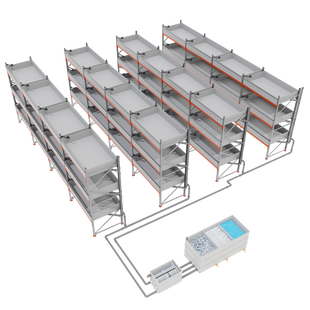
A recirculating aquaculture system, or RAS, continuously moves water between the crayfish tanks and the treatment equipment. After solids are removed and dissolved waste is biologically processed, the treated water returns to the production tanks. Depending on the project, the system may also include aeration, oxygenation, temperature control, disinfection and automatic monitoring.
RAS technology makes it possible to manage water quality and environmental conditions inside a controlled facility. It can reduce dependence on continuous water replacement and support year-round production when the building and system have been designed for the selected crayfish species.
A typical crayfish RAS may include tanks, a drum filter or another mechanical separator, a biofilter, circulation pumps, aeration equipment, pipework and water-quality monitoring devices. The final configuration depends on biomass, feeding rate, required turnover, temperature and the quality of the make-up water.
No major RAS component should be sized independently. Pump flow affects the hydraulic loading of the filters, while feed input and biomass determine the waste load that must be handled by mechanical and biological treatment. A technically balanced system is more important than selecting the largest available unit in each product category.
Mechanical and biological water treatment
Uneaten feed, faeces, moulting residues and other organic particles accumulate during crayfish production. If these solids remain in the water, they break down and increase oxygen demand and the load on the biofilter. Timely solids removal is therefore an important part of water-quality management.
Drum filters automatically separate suspended particles from the circulating water. Their operation reduces manual cleaning and limits the amount of organic matter entering the next treatment stages. A drum filter should be selected according to the actual system flow, expected solids load and feeding intensity rather than tank volume alone.
A biological filter performs a different function. It provides surface area and suitable conditions for microorganisms involved in the conversion of dissolved nitrogen compounds. Biofilter performance depends on media type and quantity, temperature, oxygen availability, hydraulic loading and the stability of the overall system.
Mechanical and biological filtration are complementary processes. Mechanical treatment removes particles, while the biofilter helps manage dissolved waste produced by the stock and the breakdown of organic matter. One stage cannot reliably replace the other in an intensive crayfish farming system.
Aeration, circulation and environmental control
Crayfish require stable water conditions, and dissolved oxygen is one of the most important operational parameters. Aeration equipment must support both the animals and the microorganisms working inside the biological filter. Its required capacity changes with biomass, temperature, feeding rate and system design.
Water circulation must provide adequate flow through the tanks and filtration units without creating unsuitable hydraulic conditions for the stock. Pumps should be selected according to the complete pipework layout, elevation differences, resistance of the treatment equipment and required turnover rate.
Depending on the species and local climate, a farm may also need heating, cooling or insulation. Monitoring equipment can be used to observe temperature, dissolved oxygen, pH and other critical parameters. In larger systems, alarms and backup equipment are important because a failure of circulation or aeration can quickly affect the whole farm.
Crayfish farming at home and small-scale production
Crayfish farming at home can be used to gain practical experience, test a production method or maintain a small broodstock group. A compact system may use fewer tanks and a simpler layout, but it still requires appropriate water quality, aeration, temperature management and regular maintenance.
A small installation should not be expanded simply by adding more tanks. As stock numbers and feeding increase, the demand on pumps, filters and aeration rises as well. Equipment that works adequately for a trial system may become undersized when the same system is used for commercial production.
Before expanding a home or pilot setup, the operator should calculate the new biomass, feed load, water flow and treatment requirements. Planned expansion is generally more efficient than repeatedly adding disconnected components to a system that was not originally designed for growth.
Commercial crayfish farm equipment
A commercial crayfish farm requires a clear production flow and separation of the main stock groups. Broodstock management, reproduction, juvenile rearing, grading and grow-out may require different tanks and operating conditions. The layout should also support routine feeding, cleaning, inspection and harvesting.
Critical equipment such as circulation pumps and aeration units may require backup capacity. The design should account for power interruptions, pump maintenance, blocked pipework and other operational risks. Reliable access to equipment is also important because even an efficient system becomes costly to operate if routine servicing is difficult.
Before purchasing equipment, the farm should define its intended production capacity, available building area, water source, energy supply and future expansion plan. This information determines the number of tanks and the required capacity of filtration, circulation and aeration.
How to raise crayfish in a controlled system
The answer to how to raise crayfish depends on the species, climate and production objective. Crayfish may be farmed in ponds, flow-through systems or recirculating aquaculture systems. Each method has different requirements for tanks, water supply, aeration, filtration and environmental control.
In an intensive controlled system, the operator must manage dissolved oxygen, temperature, nitrogen compounds, solids accumulation and stocking density. Shelters and adequate bottom area are also important because moulting, territorial behaviour and cannibalism can influence survival and growth.
The production method should therefore be defined before the equipment is selected. Tank numbers, stock groups, biomass, feed input, water turnover and oxygen demand are calculated first. Pumps, filters and aeration equipment can then be selected to support that production model.
How to select equipment for a crayfish farm
When specifying crayfish aquaculture equipment, the following factors should be considered:
- the crayfish species and its environmental requirements;
- the production stage: breeding, juvenile rearing, grow-out or holding;
- the planned number of animals and total biomass;
- daily feed input and expected organic load;
- the number, shape and volume of the tanks;
- the required water flow and system turnover;
- the expected mechanical filtration load;
- the required biofilter capacity;
- aeration, oxygenation and temperature-control requirements;
- the quality and availability of make-up water;
- the building layout and available service space;
- the intended level of automation;
- backup requirements and future farm expansion.
Selecting equipment only by price or nominal tank volume can result in incompatible components. Tanks, pumps, filtration and aeration should be sized as parts of one technical system. The correct capacity is the capacity required by the planned production load, not simply the highest value shown in a product specification.
Crayfish farm business planning and equipment costs
A crayfish farm business plan should be based on a realistic production and engineering model. Capital expenditure includes more than tanks and filters. Building preparation, pipework, electrical systems, heating or cooling, monitoring, backup equipment and installation may all affect the initial budget.
Operating costs may include energy, water, feed, juvenile stock, labour, maintenance and replacement parts. Before equipment is ordered, the farm should define its target output, production cycle, sales model and expected utilisation of the system.
CrawTec can assist with equipment selection, system design and the preparation of a crayfish farming business plan. Connecting the technical design with production and financial assumptions helps determine a realistic project scale and reduces the risk of purchasing equipment that does not match the intended operation.
Complete crayfish farming equipment from CrawTec
CrawTec manufactures aquaculture equipment and supplies components for crayfish farms of different sizes. The product range includes crayfish tanks, RAS modules, drum filters, biological filters, hatchery equipment and other units for building or upgrading a controlled production system.
To prepare an appropriate equipment configuration, provide information about the crayfish species, intended stock numbers, production stages, building conditions and required output. These details make it possible to determine the tank layout and the required capacity of the circulation, filtration, aeration and environmental-control systems.