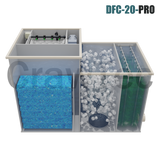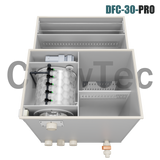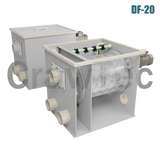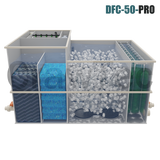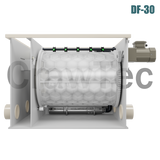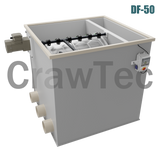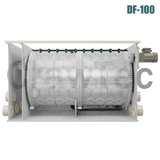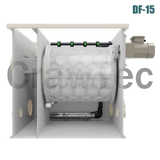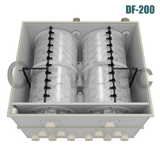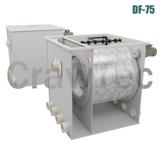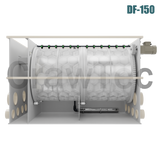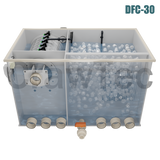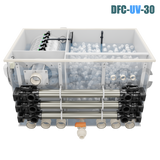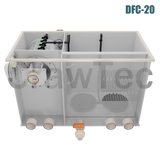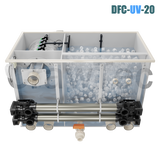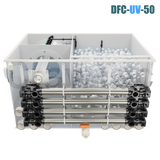
Advantages of using drum filters in an RHW system
Drum filters are an integral part of modern closed water systems (CWS). Their use brings numerous benefits that make them an indispensable tool for maintaining water quality and aquaculture success.
1. High filtration efficiency
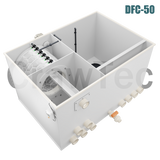
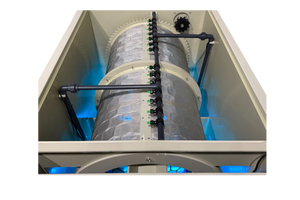
Drum filters provide mechanical filtration of solids such as feed residues, faeces and organic waste. Due to the fine mesh structure of the drum, the filters remove particles as small as a few microns, which helps to keep the water clean at a high level.
2. Reduced maintenance costs
The use of automatic drum filters significantly reduces the need for manual cleaning. Modern models are equipped with a self-cleaning function, minimising labour costs and increasing ease of use.
3 Optimisation of water parameters
Filters prevent the accumulation of organic waste, which helps to maintain stable oxygen levels, pH and other important water parameters. This is especially important for the health and growth of hydrobionts, as water quality directly affects their condition.
4. Water saving
Due to the closed-loop purification cycle, drum filters minimise the need for regular water changes. This significantly reduces the cost of water supply and the burden on the environment.
5. Versatility of use
Drum filters are suitable for various types of aquaculture, including fish, shrimp and crayfish farming. They can be used in both freshwater and marine systems.
6. Equipment durability
Many drum filter models are made from corrosion resistant materials such as stainless steel or high quality plastic. This ensures reliability and long service life, even under heavy use.
7. Environmental friendliness
The use of drum filters helps to reduce the amount of contaminants released into the environment. Wasteful, successful filter, can recycle or recycle ecologically safe way.
8. Improved conditions for hydrobionts
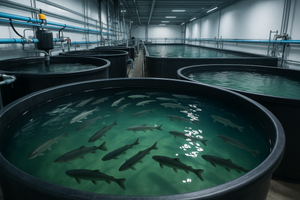
Clean water is the key to creating a comfortable environment for fish, shrimps and crayfish. Drum filters reduce the risk of disease, accelerate the growth of hydrobionts and increase the overall productivity of the farm.
Case Study
At the CrawTec farm, the use of drum filters has reduced the cost of maintaining the RAS systems by 30%. This was possible thanks to the introduction of automatic filters with self-cleaning function, which effectively remove contaminants and maintain stable water parameters.
The use of drum filters in an AHU is an investment in water quality, the health of the hydrobionts and the sustainability of your business. These filters are becoming indispensable for farmers who are committed to high levels of production and environmental responsibility.
Tips for selecting a drum filter for your RAS.
Choosing a drum filter for a closed loop water plant (CLWP) is an important step in organising a water treatment system. Given the variety of models on the market, it is important to understand the key criteria that will help you choose the best solution for your farm.
1. Determine the volume of the water treatment system
Calculate the total volume of water that will circulate in your system. This will help determine the required filter capacity. For large farms with a water volume of more than 100 m³, it is recommended to choose industrial models.
For smaller ponds or aquariums, compact models with a capacity of up to 10 m³/hour are suitable.
2. Take into account the type of hydrobionts to be grown
Different types of fish, crayfish and shrimp require different conditions. For example:
For trout and other water quality-sensitive fish it is better to use filters with fine mesh.
For crayfish and shrimp, filters optimised to minimise mechanical damage are suitable.
3. Pay attention to the material of construction
Plastic models are a budget solution for small farms. They are lightweight and corrosion resistant, but may be less durable.
Stainless steel filters are a durable and sturdy choice for industrial RCDs. They can withstand prolonged exposure to water and chemicals well.
4. Choose automation according to the scale of the farm
For small systems, a manual filter with periodic cleaning is sufficient.
For larger farms, automatic drum filters with a self-cleaning function are a more practical option. They minimise maintenance costs and allow you to focus on other aspects of management.
5. Consider energy efficiency
A filter's energy consumption is an important factor for long-term savings. Choose models that offer high performance while minimising energy consumption.
6. Check the availability of service and spare parts
Choose filters from reliable manufacturers, such as CrawTec, that provide technical support and access to parts. This is particularly important to minimise downtime in the operation of the RCD.
7. Evaluate the operating conditions
If your farm is outdoors, make sure the filter is resistant to temperature fluctuations and weather conditions.
For areas with high humidity, choose materials with anti-corrosion coatings.
8. Compare reviews and the manufacturer's reputation
Buying a filter is an investment, so it's important to consider the opinions of other users. Companies with a positive reputation, such as CrawTec, provide time-tested solutions and quality guarantees.
Conclusion
When choosing a drum filter for your RAS, focus on the needs of your system, the performance of the equipment, and the reliability of the manufacturer. If you are not sure about your choice, CrawTec specialists are always ready to advise you and offer the best solution for your farm.