

What is a crayfish CWS and what are its advantages?
Crayfish farming in closed water systems (CWS) is a promising branch of aquaculture that allows you to obtain stable and high yields regardless of climatic conditions. In contrast to traditional pond farming, CWS provides full control over water parameters, planting density, growth rate and feeding.
The main advantages of a crayfish hatchery are:
- Year-round rearing. Unlike natural ponds, where crayfish are only active during the warm season, in an AHU you can maintain optimum water temperature and grow year-round.
- Water conservation. In a properly configured system, water is recirculated and losses are minimised, which is especially important in regions where water resources are scarce.
- Faster crayfish growth. Under controlled conditions, crayfish gain marketable weight faster due to stable temperature, adequate aeration and quality feeding.
- High planting density. In an SPCR, it is possible to keep significantly more crayfish in a smaller area compared to pond farming.
What types of crayfish can be raised in an CWS?
The Australian red-clawed crayfish is the most popular, as it is characterised by fast growth, high fecundity and excellent flavour. Long-toed river crayfish can also be grown in RHV systems, but their growth is much slower.
How a crayfish CWS works
A closed water supply system (CWS) for crayfish is a complex of equipment that provides stable circulation and purification of water, creating optimal conditions for growth and reproduction of hydrobionts.
The main elements of an CWS
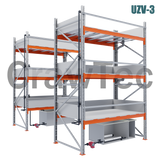
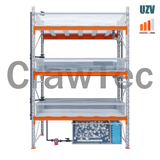
- Crayfish tanks
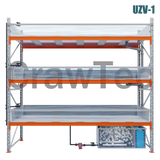
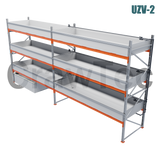
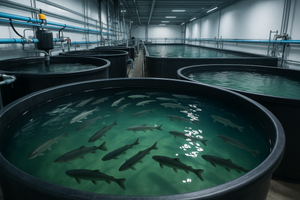
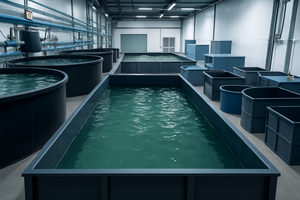
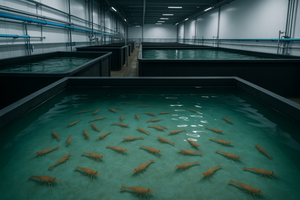
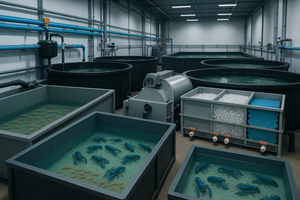
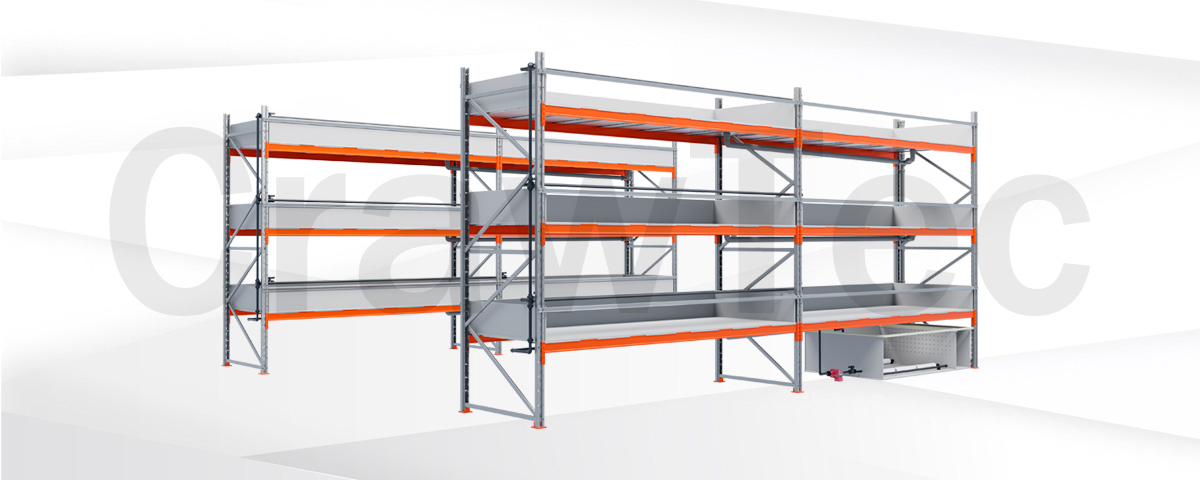
Depending on the scale of the farm, special pools, trays or modular structures made of food-grade polypropylene are used. In them crayfish are kept at different stages of growth - from larvae to marketable size.
- Filtration system
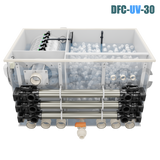
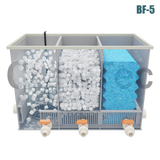
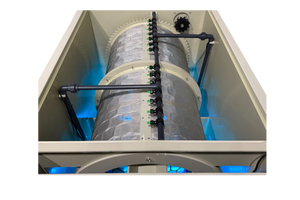
The water passes through drum filters that remove mechanical impurities (feed residues, waste products). It then enters a biological filter where ammonia and nitrite, toxic compounds that are harmful to crayfish, are decomposed using bioburden.

- Aeration system
A high level of dissolved oxygen is maintained in the CWS. This is achieved by compressors and tube atomisers, which oxygenate the water and prevent it from stagnating.
- Temperature control
For the Australian red-clawed crayfish, the optimum water temperature is 28-29°C. This can be maintained in the CWS by heating (during cold periods) or cooling (during hot seasons).
- Water circulation
Pumps ensure a uniform water flow, creating favourable conditions for the crayfish. This helps to maintain a uniform temperature and oxygen distribution throughout the system.
- Overflow and Drainage System
The CWS is equipped with overflow and drain outlets that allow for easy removal of contaminated water, controlling the liquid level in the pools and preventing stagnant areas.
Thus, an CWS is a balanced ecosystem where each element fulfils its role. It is important to select the right equipment and calculate the volumes of tanks, biofiltration and aeration to make the farm work efficiently.
Advantages of crayfish farming in an CWS
There are many advantages of using a closed water system (CWS) for crayfish farming compared to traditional methods (pond or natural ponds).
1. Water saving
The same volume of water can be used repeatedly thanks to an efficient filtration and biological purification system. This significantly reduces water supply costs and minimises the negative impact on the environment.
2. Control of water parameters
Crayfish are very sensitive to water quality. In the CWS it is easy to control:
- temperature (maintaining an optimum level of 28-29°C),
- oxygen level (aeration prevents oxygen starvation),
- ammonia and nitrite levels (biofiltration neutralises toxic compounds).
3. Higher planting density
In natural water bodies, planting densities are limited due to lack of oxygen and high levels of pollution. In an CWS, a much larger number of crayfish can be kept in a smaller area, which increases the productivity of the farm.
4. Year-round rearing
Unlike the pond method, where crayfish growth slows down during the colder seasons, in the CWS it is possible to maintain a stable water temperature, allowing year-round growth and reproduction.
5. Minimising loss and disease
In open water crayfish are susceptible to predators, disease and adverse weather conditions. In an CWS the risks are minimised by a closed system where it is easier to monitor the condition of the animals and respond to potential problems in a timely manner.
6. Stable production volume
Due to the controlled conditions, it is possible to predict the volume of produce grown, which is especially important for commercial farmers who are focused on a stable supply.
7. Feed optimisation
Specialised feeds can be used efficiently in the CWS and their consumption and composition can be controlled, which has a positive effect on growth rates and the quality of the final product.
Due to these advantages, crayfish farming in an SPCR is becoming increasingly popular among farmers seeking a highly profitable business.
Selecting equipment and calculating planting density
Crayfish farming in a CWS requires the correct selection of equipment and the correct calculation of planting density to ensure optimum conditions for growth and reproduction. Mistakes at these stages can lead to stunted growth, stressed animals and even high mortality rates.
It is important to consider when selecting equipment as part of a crayfish CWS:
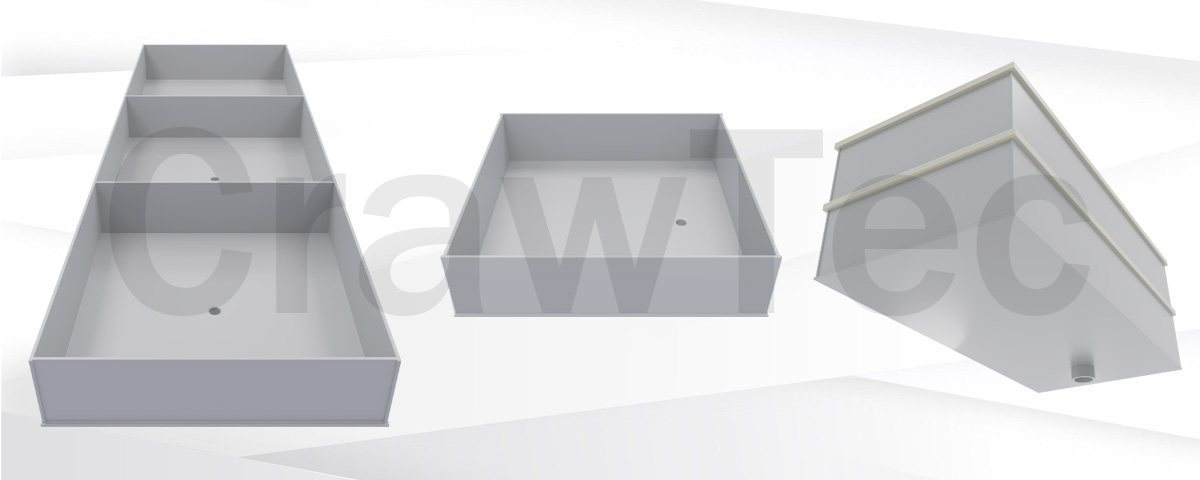
- Growing tanks
Crayfish are grown in special pools or trays made of food-grade polypropylene. Their size depends on the scale of the farm. It is important to consider ease of maintenance, water circulation and separation of individuals by age and size.
- Filtration system
Filtration is one of the most important aspects of an CWS. Without quality filtration, the water will quickly become contaminated with crayfish waste products, which can lead to poisoning. Two types of filters are commonly used:
Drum filters - remove mechanical contaminants such as feed residues and waste products.
Biofilters - provide decomposition of ammonia and nitrite, converting them into less toxic compounds.
- Aeration and compressors
Crayfish consume oxygen, so the system should include compressors and atomisers to oxygenate the water. Oxygen deficiency stunts the growth of crayfish and can lead to their death.
- Water circulation pumps
Ensure a constant flow of water through the filters and an even distribution of oxygen.
- Heating system (if necessary)
For accelerated growth of Australian crayfish, water temperature should be 28-29°C. In colder regions, heaters and heat exchangers are used.
- Water parameter monitoring system
Automatic sensors monitor pH, ammonia, oxygen, temperature and salt content. This reduces risks and simplifies system management.
Calculation of the crayfish stocking density in the CWS
The number of crayfish per unit area is a key factor affecting the productivity of a farm.
Optimal planting density:
- Crayfish fry (0.5-2 g) - up to 500 individuals per 1 m².
- Juveniles (5-10 g) - 150-200 individuals per 1 m².
- Adult crayfish (30-50 g) - 50-80 individuals per 1 m².
It is important to consider that too high a density leads to stress, competition for food and oxygen, and too low a density reduces profitability.
Why is it important to correctly calculate the volume of a crayfish farm?
Properly calculating planting density allows you to:
- Balance the load on the filtration system.
- Minimise stress and aggression among the crayfish.
- Achieve maximum productivity of the farm.
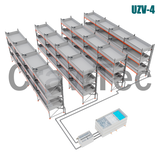
CrawTec, with 10 years of experience in Australian crayfish farming, helps farmers select equipment and calculate farm sizes to suit their specific needs. We design and manufacture ready-made SPCRs of all sizes, from small farms to large industrial complexes.
Beginner's mistakes when starting a closed-circuit water supply system
Starting up a closed water supply system (CWS) for crayfish breeding is not just a matter of installing equipment and starting up the water. Beginners often make mistakes that lead to reduced farm productivity, crayfish stress and even mass mortality. Let's look at the most common mistakes and how to avoid them.
1. Lack of attention to water preparation
❌ Mistake: Many novice farmers start crayfish in the system immediately after filling the tanks with water, without considering its chemical composition and the need for biofilter maturation.
✅ Correct approach:
The water in the CWS must be prepared: pH, hardness, ammonia and nitrate levels checked.
The biofilter must pass the stage of repopulation with beneficial bacteria (this takes 2-4 weeks).
Before launching crayfish, a test check of the entire system is carried out.
2. Overpopulation of tanks
❌ Mistake: Placing too many crayfish in one tank leads to competition for oxygen, food and space, which increases stress levels and leads to cannibalism.
✅ Proper Approach:
Observe the recommended planting density (up to 80 adult crayfish per 1 m², more details in the previous block).
Separate crayfish by size and age.
Use shelters in containers (PVC pipes, mesh partitions).
3. Poor filtration and lack of oxygen
❌ Failure: Installing an inadequate filtration and aeration system leads to water contamination and oxygen deficiency.
✅ Correct approach:
- Use drum filters to remove mechanical contaminants.
- Install biofilters to decompose toxic compounds.
- Provide efficient aeration (calculate compressor capacity and number of sprayers).
4. Mistakes in crayfish feeding
❌ Mistake: Using unsuitable feed or overfeeding leads to water damage and ammonia.
✅ The right approach:
- Select feed based on the age of the crayfish and growing conditions.
- Control portions (food should not remain on the bottom for longer than 2 hours).
- Use specialised feeds or prepare a balanced diet yourself.
5. Ignoring water parameters
❌ Mistake: Many farmers do not monitor changes in pH, ammonia, nitrite, and oxygen in the system.
✅ The right approach:
- Install automatic water monitoring sensors or take measurements every 2-3 days.
- Monitor ammonia levels (no higher than 0.05 mg/l).
- Partially change the water if necessary.
6. Lack of back-up equipment
❌ Failure: A pump or compressor failure can kill the entire stock in a matter of hours.
✅ The right approach:
- Keep backup compressors and pumps in case of emergency replacement.
- Install emergency power (e.g., UPS or generator).
Most mistakes can be prevented if you prepare thoroughly before starting your farm. CrawTec provides not only the equipment for the CWS, but also advice on farm start-up and management, based on 10 years of experience in commercial crayfish farming.
Is it possible to make a crayfish hatchery with your own hands?
Many novice farmers wonder whether it is possible to build a crayfish hatchery with their own hands and how justified it is. In theory - yes, but in practice this approach requires considerable knowledge and resources. Let us consider the main nuances that will be faced by those who decide to make the system on their own.
1. Design: where to start?
The first stage is the development of the project. It is important to take into account:
- The volume of water in the system (depends on the number of crayfish and planting density).
- Filtration and aeration (what filters, bioburden, compressors will be used).
- Equipment placement (tanks, pipework, pumps, water intake and air supply points).
- Energy consumption and backup power sources.
A design error can result in inefficient system operation or even crayfish mortality.
2. Selection of tanks
For crayfish breeding, you can use:
- Plastic tanks (durable, safe, easy to clean).
- Concrete pools (expensive, require waterproofing).
- Homemade structures (made of PVC sheet or polypropylene).
Important: homemade containers can be an unsuccessful solution, if you do not take into account the chemical inertness of the material, ease of cleaning and availability of water supply.
3. Water filtration: is it possible to do it yourself?
Water purification in a CWS is one of the most complex processes. The system will require:
- Mechanical filtration - traps debris and waste.
- Biofiltration - decomposes ammonia and nitrites.
- Aeration - saturates the water with oxygen.
Is it possible to make a biofilter with your own hands? In principle, yes. But without accurate calculation of the amount of bio-loading and proper selection of material, the efficiency will be low.
4. Potential problems when assembling a homemade CWS
- Incorrect calculations can lead to overcrowding and lack of oxygen.
- Homemade tanks are often difficult to maintain.
- Lack of automatic water control system leads to sudden spikes in parameters.
- Saving on filters leads to water quality problems and crayfish diseases.
The optimal option is to either carefully study all the nuances before assembling your system, or to buy a ready-made set of CWS with proven characteristics.
It is possible to make a crayfish CWS with your own hands, but it is a complex process that requires knowledge of hydrobiology, engineering and water chemistry. If the goal is to get a stable income, it is better to turn to specialists who will help to select and configure the system.
Where to buy a crayfish CWS and what to look for?
Buying a crayfish CWS is a responsible step, on which the efficiency of the business depends. To choose the best equipment, it is important to consider several key factors.
1. Pay attention to the equipment
A good crayfish CWS system should include:
✅ Quality tanks - made of safe material, easy to clean.
✅ Water filtration - biofilters and drum filters with properly rated capacity.
✅ Aeration system - compressors and atomisers for oxygen supply.
✅ Pumps to circulate the water - taking into account the required flow rate.
✅ Automation and control sensors to maintain stable water parameters.
Tip: When buying a CWS, check if bioburden, filter sponges and consumables are included.
2. Where is the best place to buy an CWS?
Private sellers (second-hand equipment and outright self-made) - risk of getting worn out or non-working systems.
Little-known manufacturers - possible problems with quality and lack of technical support.
Specialised manufacturers - the best option if you need a quality guarantee, advice and the ability to adjust to your conditions.
3. Why choose CrawTec?
CrawTec is a crayfish breeding equipment manufacturer with 10 years of experience in the crayfish farming industry.
CrawTec manufactures complete systems from tanks to filtration.
Develops customised solutions - the CWS can be adapted to your application.
We support you from design to start-up.
Important: In addition to off-the-shelf solutions, CrawTec can design a farm of any capacity, adapted to the production volume and breeding characteristics of different crayfish species.