

Why do I need a shrimp RAS system?
Closed-loop aquaculture systems (CLS) are an innovative technology in aquaculture that allows the efficient cultivation of shrimp under controlled conditions. The main benefits of using a CLS for shrimp farming include:
- Control of water parameters: The RAS system provides stable environmental conditions, which is critical for shrimp growth and survival.
- Reduced risk of disease: Due to the closed cycle and filtration systems, the possibility of introducing pathogens from the outside environment is minimised.
- Water saving: Water recycling significantly reduces water consumption compared to conventional methods.
- High planting density: Controlled conditions allow the number of individuals per unit volume to be increased without compromising their health.
Studies show that the use of RAS systems improves shrimp growth and survival rates and increases profitability.
How does a shrimp RAS system work?
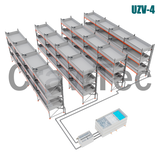
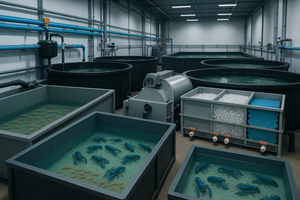
A closed-loop shrimp farming facility is a complex system that provides constant circulation, purification and oxygenation of the water. Unlike traditional methods of rearing in open water or ponds, a CLS allows for high planting densities, stable growth and minimised disease.
The key elements of an RAS system are
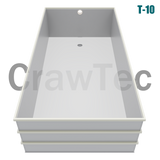
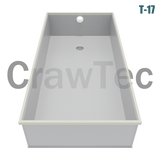
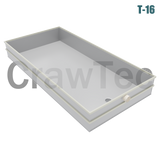
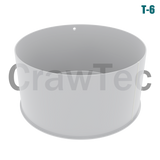
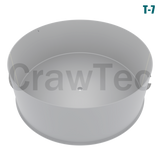
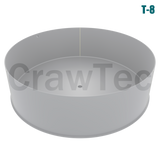
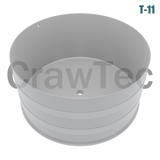
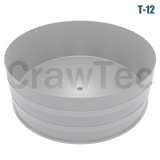
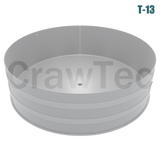
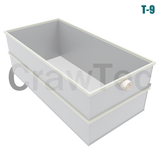
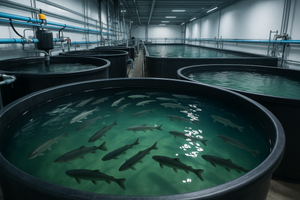
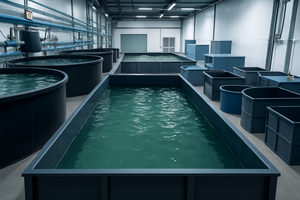
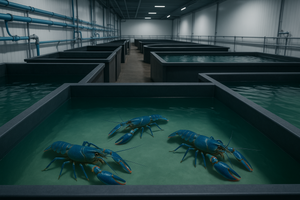
- Shrimp culture tanks
- Pools or trays, usually made of food-grade polypropylene, are used.
- The size and depth of the tanks depend on the biological characteristics of the shrimp species being reared (e.g. the white legged shrimp Litopenaeus vannamei requires shallow but spacious pools).
- The optimum planting density can be up to 500 shrimps per 1 m².
- Filtration system
The RAS system includes several stages of water purification:
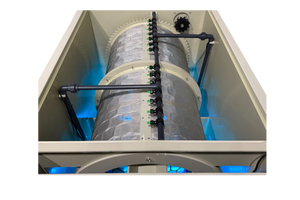
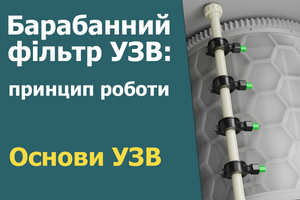
- Mechanical filtration - removes solid waste products from the shrimp. Drum filters or strainers are used.
- Biofiltration - the process of decomposition of ammonia and nitrite into safe compounds (nitrates). Special biochar with highly effective nitrifying bacteria is used.
- Degassing - removal of excess carbon dioxide from the water using aeration columns or special chambers.
- Ultraviolet (UV) or ozone treatment - kills pathogens, preventing disease outbreaks.
- Aeration, air supply
Oxygen is essential for shrimp life, so compressors and atomisers are used to create an oxygenated environment.
Additionally, oxygenators can be used to maintain dissolved oxygen levels within 5-7 mg/l.
- Heating and temperature control system
Shrimp are sensitive to temperature fluctuations. For example, L. vannamei requires a temperature of 26-30°C to be maintained. Immersion heaters, heat exchangers or heat recovery systems are used.
- Automated control
Modern RASs are equipped with controllers that regulate water parameters including:
✅ Oxygen and ammonia levels.
✅ Temperature and salinity.
✅ Medium pH and water circulation rate.
RAS system technology for shrimp greatly improves rearing efficiency, reduces losses and makes business more predictable. However, proper operation of the system requires proper selection of equipment and compliance with biological requirements for shrimp.
Rosenberg shrimp farming in RAS system complexes
The Rosenberg shrimp (Macrobrachium rosenbergii) is one of the most promising aquaculture species for commercial breeding. This species is characterised by high growth rate, resistance to various conditions and good feed conversion. However, traditional pond farming methods have a number of disadvantages: climate dependence, high mortality rates, and difficulty in controlling water quality.
RAS system solve these problems by creating a fully controlled environment for shrimp. This technology allows:
- Maintain optimal water parameters (temperature, oxygen, pH).
- Avoid losses due to predators and diseases common in open water.
- Maximise space efficiency by increasing planting density.
- Reduce water consumption and minimise environmental impact.
These advantages have made RAS systems the mainstay of industrial Rosenberg shrimp farms in many countries including Thailand, China and the USA.
Biology and characteristics of the Rosenberg shrimp
The Rosenberg shrimp (Macrobrachium rosenbergii) is one of the largest freshwater shrimp in the world. In the wild, it lives in rivers and estuaries of Southeast Asia, but due to its high marketable characteristics, it is successfully grown in aquaculture facilities around the world.
Key biological features:
- Growth and size - males reach 30-35 cm and can weigh up to 200-300 g, while females are smaller (up to 25 cm).
- Temperature regime - optimum water temperature is 26-31°C. At a drop to 20°C growth slows down, and at 15°C mass mortality is possible.
- Reproduction - shrimp go through several stages of development: eggs → larvae → postlarvae → postlarvae → juveniles → adults. Larval development requires brackish water (2-12 ppt), but after metamorphosis they move to fresh water.
- Social behaviour - shrimps have a pronounced hierarchy. Males are divided into three morphotypes: dominant (blue), intermediate and subordinate. This affects their growth rate and aggressiveness.
- Nutrition - omnivorous, but prefer animal proteins. In artificial cultivation, special pelleted feeds with a protein content of 30-40% are used.
How does the shrimp RAS system work - key elements of the system?
The Rosenberg shrimp RAS system is a closed ecosystem in which optimal conditions for growth and reproduction of shrimp are maintained. The main purpose of such a system is to ensure stable water quality, oxygenation and waste removal.
The main elements of a shrimp RAS system:
- Containment tanks and pools
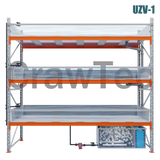
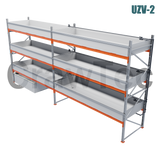
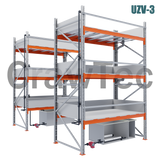
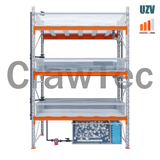
Made of food-grade polypropylene, fibreglass or concrete. The optimum depth is 80-120 cm to avoid temperature spikes. Tiered racking systems are often used to save space.
- Water filtration
- Mechanical filtration - removes suspended particles, faeces and feed residues (drum filters, skimmers).
- Biological filtration - decomposes ammonia and nitrites to safe nitrates (biofilters with loading, ceramic rings or sponges).
- Disinfection - UV sterilisers and ozonators inhibit the development of pathogenic microflora.
- Aeration system
Shrimps need a high concentration of oxygen in the water (at least 5 mg/l). Membrane or turbine compressors with tube atomisers are used.
- Heating and temperature control
A temperature range of 26-31°C is maintained using flow heaters, heat pumps or solar collectors. Automatic control systems regulate temperature fluctuations.
- Feeding and control
Feeding can be manual or automated. High protein extrusion feeds are used, it is important to keep the feed balance to avoid water contamination.
Advantages of a shrimp RAS system:
- Complete control over water parameters.
- Water saving compared to traditional methods.
- Possibility to grow all year round.
- High planting density (up to 250-300 shrimps per m²).
Selection of equipment and calculation of planting density
When creating a shrimp RAS system, it is important to choose the right equipment that will provide stable conditions for their growth. Mistakes at this stage can lead to reduced productivity or even the death of the stock.
The main criteria for selecting equipment
Filtration
Drum filters are effective for removing solid waste. Biofilters with loading (K1, sponge, zeolite) provide ammonia decomposition, UV sterilisers reduce bacterial load.
Aeration
Membrane or piston type compressors create a stable oxygen saturation. The optimum oxygen level is 5-7 mg/l.
Water heating
Electric heaters and heat pumps maintain a temperature of 26-31°C. It is important to consider heat losses when designing the system.
Feeders and feeding systems
Automatic feeders ensure uniform feed distribution. Floating or sinking feeds with a protein content of 35-40% are used.
Calculation of planting density
The optimum density depends on the size of the pool and the aeration intensity:
- Extensive systems - 50-100 individuals per m².
- Semi-intensive systems - 100-200 individuals per m².
- Intensive systems - 250-300 individuals per m².
High densities require increased filtering and a stable oxygen level, otherwise the risk of disease outbreaks increases.
Mistakes of beginners when starting an RAS system
Creating a shrimp RAS system is a promising, but not easy business. Many beginners make mistakes that can lead to reduced productivity, loss of juveniles and financial losses. Let's look at the key problems and ways to avoid them.
❌ Mistake 1. Insufficient system planning
Many people begin construction of an aquaculture sanctuary without a clear understanding of the technology. For example, they choose the wrong volume of pools or incorrectly calculate filtration capacity.
How to avoid:
✅ Design the system ahead of time for load and planting density.
✅ Consult experts or study the experience of working farms.
❌ Mistake 2. Disturbing the biological balance
Beginners often do not consider the nitrification processes in the biofilter. Without a stable filter start-up, the water quickly becomes contaminated with ammonia, which is dangerous for the shrimp.
How to avoid:
✅ Before the shrimps are stocked, ‘run’ the biofilter for 3-4 weeks with an ammonia source.
✅ Use tests to control water: ammonia (NH₃), nitrite (NO₂-), nitrate (NO₃-).
❌ Mistake 3. Insufficient aeration
Rosenberg shrimp are very sensitive to oxygen levels. If aeration is poor, the juveniles begin to die.
How to avoid:
✅ Install powerful compressors and backup air supply.
✅ Check oxygen levels regularly, especially at high planting densities.
❌ Mistake 4. Overfeeding and water contamination
Feeding ‘by eye’ leads to excess organics that decompose and degrade water quality.
How to avoid:
✅ Use feeders with a dispenser or give feed in small portions 4-5 times a day.
✅ Monitor feeding levels and remove uneaten leftovers.
❌ Mistake 5. Neglecting disease prevention
If water quality and prevention are not monitored, the farm may experience infections such as white spot virus (WSSV) or bacterial diseases.
How to avoid:
✅ Use quarantine before introducing new shrimp.
✅ Use probiotics to stabilise the microflora.
✅ Disinfect equipment and water.
Is it possible to make a shrimp hatchery with your own hands?
Many beginning farmers want to save money and think about creating a shrimp RAS system with their own hands. Theoretically it is possible, but in practice it often leads to serious problems. Let's analyse what can really be done independently, and what is better to entrust to professionals.
What can be assembled by yourself?
- Pools for shrimp. You can make them from food-grade polypropylene or fibreglass, but it is important to take into account the convenience of maintenance and water circulation.
- Aeration. Tubular atomisers can be bought separately and connected to a compressor. The main thing is to correctly calculate the power.
- Circulation system. If you correctly select the pumps, you can assemble a system of pipelines for pumping water between the tanks.
Difficulties in the independent creation of an RAS
- Starting the biofilter. Biological filtration is a complex process that requires calculations and competent selection of bio-loading. An error in design can lead to ammonia spikes and shrimp deaths.
- Automation. A RAS system requires constant monitoring of water parameters (pH, oxygen, ammonia, temperature). Automated systems are expensive, but without them, production becomes risky.
- Tightness and hydraulics. Errors in pipework connections or incorrect water level calculations lead to flooding of the farm and loss of equipment.
Is it worth to build an RAS system on your own?
For a small home system (up to 1 m³), you can try to build it yourself. But for commercial shrimp farming (from 10 m³ and up), a homemade RAS system is a high risk. It is much safer to buy a ready-made project or order the development of specialists.
Where to buy a shrimp RAS system and what to pay attention to?
If you decide to engage in shrimp farming in closed water supply installations, it is important to choose the right equipment. Mistake in the choice can lead to low productivity, high energy consumption and even death of the entire stock.
Key parameters for selecting a closed-loop RAS system
✅ System volume. It is necessary to take into account the planned volume of cultivation and the area of the room. Small systems (up to 5 m³) are suitable for technology testing, while for commercial production it is better to choose systems from 10 m³.
✅ Filtration. A shrimp RAS system requires strong biological filtration because shrimp are sensitive to ammonia. Good systems use floating-load biofilters and drum filters for mechanical cleaning.
✅ Aeration. Without enough oxygen, shrimp will not grow and may even die. Check the capacity of compressors and whether there is an even distribution of oxygen throughout the tank.
✅ Energy efficiency. Electricity is one of the key costs in an RCD. Modern pumps and compressors use less energy for the same operating efficiency.
✅ Automation. Having systems to control water parameters makes farm management much easier and reduces risks.
Why choose CrawTec's closed-loop water systems?
CrawTec designs and manufactures closed water systems for shrimp, crayfish and fish farming. Systems are designed with years of experience.
- Customised to your application. From small-scale test systems to large-scale production farms, we design closed-loop aquaculture systems of any capacity.
- Turnkey solutions. All systems are complete with the necessary filters, compressors and pumps.
- Warranty and support. We help our customers from farm start-up to feed selection and optimisation of growing conditions.
Want to buy a shrimp RAS system? Contact us and we will find the perfect solution for your business!