


|
Quantity
|
Total
|
||
|
|
|||
Filtration systems for ponds and water features
Filtration systems for ponds are needed for more than just making the water look cleaner. In a properly maintained pond, filtration serves several purposes at once: it removes mechanical debris, reduces the organic load, maintains stable water quality and helps create safe conditions for fish. This is precisely why pond filtration plays a key role in both ornamental ponds and those housing koi, carp or other fish.
In many cases, pond owners face the same problems: cloudy water, silt build-up, unpleasant odours, excessive algae growth, clogged pumps and a general deterioration in the condition of the pond. If the water circulates but does not undergo proper purification, the problem only worsens over time. Therefore, a pond filter is not an optional extra, but a fundamental component of any sustainable system.
Modern pond water filtration systems are selected to suit specific operating conditions. For a small ornamental pond, water clarity and ease of maintenance are key. For a fish pond, the focus shifts to maintaining stable water parameters, breaking down organic matter, and protecting aquatic life from toxic compounds. For commercial and agricultural facilities, performance, reliability, and the ability to upgrade the existing system without completely overhauling the pond are paramount.
If the system is selected correctly, water filtration in the pond becomes predictable and controllable. The water remains clear for longer, the frequency of manual cleaning is reduced, the load on the equipment is lowered, and fish husbandry becomes safer. Therefore, when selecting equipment, it is important to consider not only the individual filter for the ornamental pond, but also the entire logic of water circulation and purification within the system.
What problems does pond water filtration solve?
The main task of any pond filtration system is to remove contaminants that constantly enter the water or form within the pond itself. These can include leaves, soil particles, dust, uneaten food, fish excrement, slime, algae and suspended organic matter. If these contaminants are not removed in time, they begin to settle at the bottom, decompose and deteriorate the overall condition of the pond.
The biological component is no less important. When there are fish in the pond, metabolic waste products constantly accumulate in the water, including ammonia and other compounds that are hazardous at high concentrations. A pond biofilter helps create conditions for beneficial bacteria to thrive, which break down these substances into less toxic forms. This is precisely why biological filtration is particularly important in koi ponds, fish breeding ponds and systems with high stocking densities.
Water filtration in a pond also directly affects the appearance of the water body. When mechanical impurities are removed from the water and the organic load is reduced, the likelihood of algal blooms, overgrowth and cloudiness decreases. As a result, the pond water treatment system benefits not only the health of the fish but also the aesthetic condition of the pond, which is particularly important for private garden and ornamental ponds.
Furthermore, a properly organised system reduces the load on other equipment. When a mechanical pond filter effectively removes large and medium-sized debris, pumps, pipes and additional components operate more reliably and require less maintenance. This is particularly important for owners who want a reliable, long-term solution rather than having to deal with the consequences of poor filtration every season.
What makes up an effective pond filtration system
A comprehensive pond filtration system is usually not built around a single component, but as a combination of several treatment stages. First, the water undergoes mechanical filtration, where suspended particles and organic debris are removed. After this, the flow can be directed to biological treatment, where dissolved pollutants are processed. This sequence is considered the most logical, because the biological part of the system operates more reliably when it is not overloaded with mechanical debris.
Mechanical filtration is particularly important for ponds where large amounts of leaves, dust or uneaten food enter the water, or where fish are kept. Under such conditions, without the removal of solid particles, the water quickly loses its clarity and the bottom becomes covered in sediment. A well-chosen mechanical filter for a pond reduces the need for manual cleaning and slows down the accumulation of organic matter in the system.
Biological filtration in a pond serves a different purpose. It does not make the water visually clear on its own, but ensures the steady breakdown of dissolved fish waste products. This is precisely why a filter for a fish pond should almost always include not only a mechanical stage but also a biological stage. Without this, the system may appear to be working on the surface, but it will not be able to cope with the actual load on water quality.
In practice, combined solutions are increasingly being used. They combine several functions into a single circulation line and allow for the construction of a more compact and straightforward maintenance system. For the owner, this means that the pond water filtration system operates as a single integrated unit: it removes debris, stabilises water parameters and helps keep the pond in good working order without constant intervention.
Where are pond filtration systems used?
Pond water filtration systems are in demand for a wide variety of water bodies. One of the most common applications is in ornamental and garden ponds, where water clarity, a neat appearance and reduced manual maintenance are key priorities. In such settings, a filter for a decorative pond helps to keep the water clean throughout the season and reduces the risk of rapid contamination following rain, autumn leaf fall or hot weather.
A separate category comprises ponds with fish. These can range from small private ponds with koi or carp to more substantial facilities with a constant biological load. In such conditions, the pond filtration system must work not only to ensure visual clarity but also to genuinely stabilise water parameters. The higher the fish density and the more intensive the feeding, the greater the filtration requirements.
Pond filtration is also relevant for agricultural and industrial water bodies, where reliable water treatment is required, taking into account practical operational requirements. In such projects, performance, maintainability, the possibility of retrofitting, and adaptation to the existing hydraulic layout are important. Often, the focus is not on constructing a new facility, but on modernising an existing pond, where a more efficient water treatment system is needed without a complete overhaul.
The most typical areas of application can be summarised into several main categories:
- ornamental and garden ponds, where water clarity and an attractive appearance are important;
- koi ponds and fish ponds, where stable mechanical and biological filtration is required;
- agricultural and industrial water bodies, where equipment performance and reliability are paramount.
This is precisely why filtration systems for ponds and water bodies cannot be viewed as a single, universal solution. The approach to an ornamental pond, a koi pond and an industrial facility will differ. But in all cases, the objective remains the same: to ensure stable circulation, remove contaminants and make the water body’s operation more predictable throughout the season.
How to choose a pond filter and get the configuration right
Choosing equipment always starts with understanding the actual load on the pond. It is not enough to know just the volume of water. It is important to take into account the presence of fish, feeding intensity, the shape of the pond, its depth, the surface area of the water, the amount of organic matter entering from outside, and the circulation regime. A pond of the same volume may require a completely different filtration system depending on whether it is decorative or used for keeping fish.
If the task is to select a filter for a garden pond or ornamental water feature without a high biological load, the main emphasis is usually placed on mechanical filtration and stable circulation. However, when it comes to a pond with koi or other fish, the pond’s water filtration system must be designed with a margin of capacity. In such cases, the biological stage becomes no less important than the mechanical one, because it is precisely this stage that ensures the system’s long-term stability.
When selecting equipment, it is important to determine in advance whether a separate mechanical filter for the pond, a biological filter for the pond, or a combined solution is required. There is no one-size-fits-all answer here. Sometimes it makes more sense to separate the treatment stages, particularly in larger systems. In other cases, it is more practical to use a ready-made combined system, which takes up less space and simplifies maintenance.
Before choosing a system, it is worth considering several basic parameters:
- the volume of the pond, actual water exchange and circulation capacity;
- the presence of fish, stocking density and feeding intensity;
- the type of contaminants: leaves, silt, organic matter, uneaten food, fine suspended matter;
- the need to upgrade an existing system without completely redesigning the pond;
- ease of maintenance, access to equipment and the possibility of future expansion.
The more accurately these parameters are assessed, the higher the likelihood that the pond filtration system will operate reliably and will not require constant adjustments after installation. This is precisely why reliable filtration is not just a matter of choosing a specific product, but also of correctly matching the equipment to the specific requirements of the pond.
CrawTec pond filtration systems
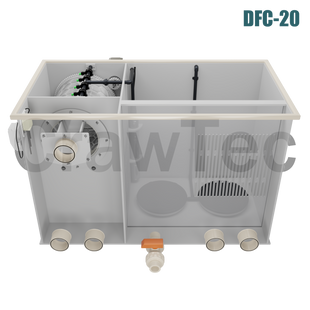
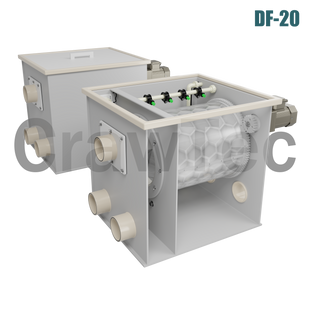
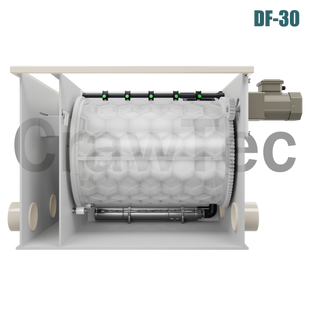
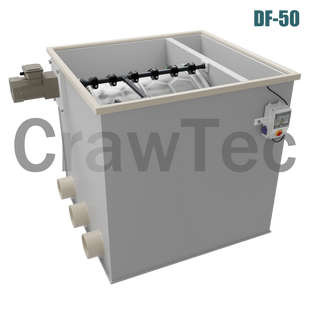
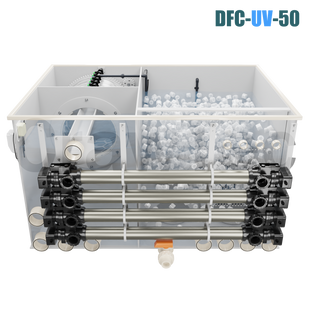
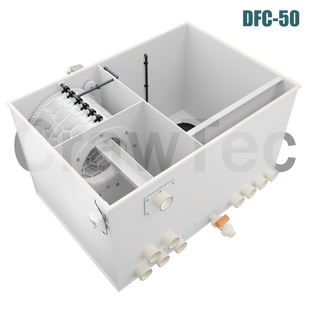
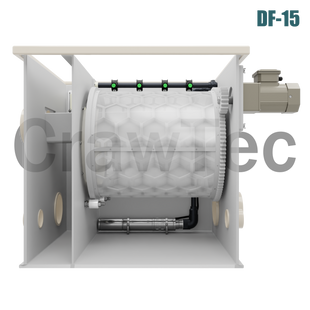
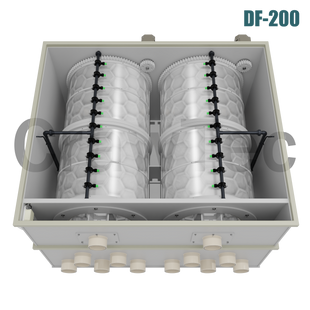
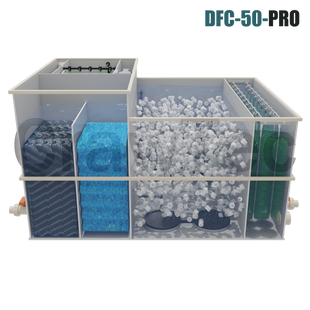
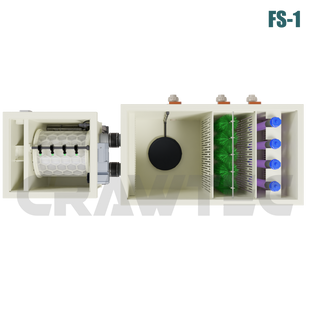
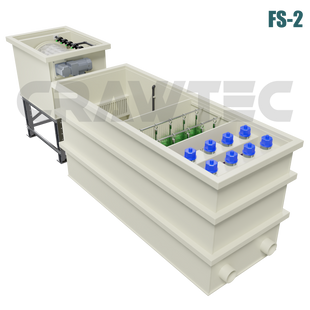
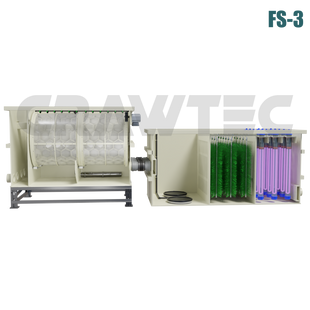
CrawTec pond filtration systems are designed for practical use in ornamental, fish-farming and technical ponds. These solutions can be used both when creating a new filtration system and when upgrading an existing pond. This is particularly important in cases where the owner needs to improve water quality, reduce the amount of manual maintenance and ensure the system operates more reliably without a complete overhaul of the site.
Pond filtration equipment is selected taking into account the type of water body, fish stocking density and the required capacity. In some cases, the priority is mechanical cleaning and the removal of suspended solids; in others, a comprehensive pond filtration system with a biological component. This approach allows solutions to be used for both ornamental ponds and facilities where pond water filtration needs to operate more intensively.
A particular advantage lies in the ability to integrate the system into existing infrastructure. For many pond owners, this is of fundamental importance, as the focus is often not on new construction but on improving an existing system. In such cases, the pond water treatment system must be not only effective but also convenient in terms of integration, maintenance and ongoing operation.
The practical purpose of this product category is to offer solutions for various application scenarios without unnecessary theory and without being tied to a single type of facility. Whether you need a filter for a fish pond, a filter for an ornamental pond, or a water filtration system for a larger body of water, the logic behind the choice remains the same: the equipment must be able to handle the actual load, operate reliably, and help maintain the water in a controlled state.
This is precisely why filtration systems for ponds and water bodies should be considered a separate category of equipment. They are not simply a set of filters, but tools for solving specific tasks: removing contaminants, improving water clarity, protecting fish and enhancing the overall reliability of the water body. When selected correctly, such a system forms the basis for the normal operation of a pond throughout the season, and in some cases, all year round.