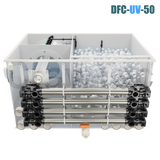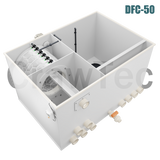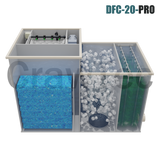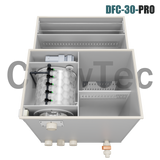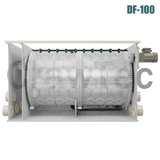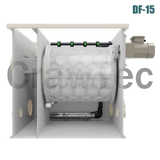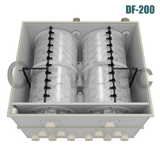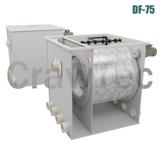


Advantages of using drum filters in an aquarium system
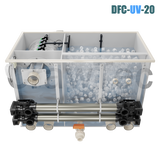
Drum filters are a key element of closed-loop water systems (CLWS) that provide optimum conditions for growing fish, crayfish and other hydrobionts. Let's consider the main advantages of this equipment, which make it indispensable for modern aquaculture farms.

High filtration efficiency
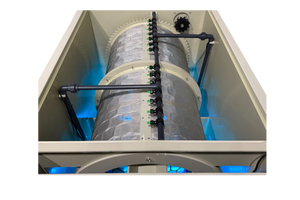
Drum filters effectively remove even the smallest particles of dirt and organic debris such as food residues, excrement and other contaminants from the water. The fine mesh (up to 40 microns) ensures a high degree of water purification, which creates a favourable environment for hydrobionts.
Water saving
One of the key advantages of drum filters is minimal water consumption. In closed-loop water supply systems (CLS) it is important to maximise water conservation and reuse. The automatic self-cleaning system of the filters allows the removal of contaminants without the need for a complete water change, thus significantly reducing operating costs.
Stability of water parameters
Water treatment with a drum filter helps to maintain stable water parameters such as oxygen, nitrogen and other compounds. This is especially important for sensitive fish and crustacean species that require a stable environment for successful growth and reproduction.
Time and labour savings
Automated drum filters minimise the manual labour involved in system maintenance. The self-cleaning process is automatic, allowing staff to spend more time on other tasks related to farm management.
Durability and reliability
Modern drum filters are made of high quality materials that are resistant to corrosion and mechanical damage. This ensures a long service life even in constant contact with water and organic contaminants.
Versatility of use
Drum filters are suitable for use with different water volumes and types of RCDs. They can be used in fish, shrimp and crayfish farming systems as well as in ornamental ponds and aquariums.
Reducing the risk of disease
Contaminated water is one of the main causes of disease in fish and other aquarium inhabitants. Removing organic residues and suspended particles with a drum filter reduces the bacterial load and the risk of spreading infections, which helps to increase survival and productivity.
Energy efficiency
Drum filters consume a minimal amount of energy, making them a cost-effective choice for farmers. The high energy efficiency of the equipment reduces operating costs and makes the system more environmentally sustainable.
Easy to integrate into closed-loop water systems
The filters can be easily integrated into existing closed water systems. The different models allow you to select the ideal equipment for your farm, regardless of its size and specialisation.
Increased farm productivity
By improving water quality, reducing disease and increasing the survival rate of hydrobionts, the use of drum filters increases farm productivity. This allows for increased cultivation without the need for significant investment in infrastructure expansion.
Ecological safety
The reuse of water and reduction of pollutant emissions makes drum filters an environmentally friendly solution. This is especially important in the face of stringent environmental regulations and requirements.
Long-term savings
Despite the initial investment, drum filters pay for themselves by reducing water, energy and labour costs. The equipment's longevity and minimal maintenance requirements make it a favourable choice for farmers.
Maintains modern standards
The use of drum filters meets modern aquaculture standards and allows farms to achieve certification, which increases customer confidence and improves market position.
Drum filters are not just equipment, but an important tool for improving the efficiency and sustainability of aquaculture farms. Choosing this equipment is an investment in the quality, stability and profitability of your business.
Types of drum filters and their applications
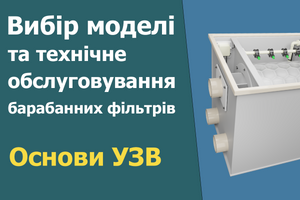
Drum filters for aquaculture farms vary in design, performance and functionality. Their choice depends on the volume of water, the type of growing hydrobionts and operating conditions. In this section we will look at the main types of drum filters and their application in aquaculture.
1. By material of construction
Plastic drum filters
These filters are lightweight, corrosion and chemical resistant. They are ideal for small systems or ponds. Plastic models are often used on private farms or farms with limited budgets.
Metal drum filters
Made of stainless steel or other corrosion-resistant materials. These filters are highly durable and long-lasting, making them ideal for industrial RCDs with large volumes of water.
2. By principle of operation
Gravity drum filters
Water enters the filter by gravity, which simplifies construction and reduces energy costs. These filters are popular for use in systems with natural water levels.
Pressure drum filters
They operate under pressure, which allows them to be installed in pressurised water systems. They provide higher filtration rates and are suitable for larger farms.
3. By size and capacity
Compact models
Ideal for small ponds, aquariums or home fish and crayfish farming systems. They take up minimal space and are easy to maintain.
Industrial drum filters
Designed to treat thousands of litres of water per hour. Used on large farms where high speed and volume of filtration is required.
4. By purpose
Fish filters
Optimised to remove fine particles without damaging the mucous membranes of fish. They are used for trout, carp and other species.
Crayfish and shrimp filters
These models take into account the peculiarities of keeping crustaceans, minimising mechanical damage to their shells.
Universal filters
Suitable for all types of hydrobionts. These filters are the universal solution for farms with a diverse range of products.
5. By level of automation
Manual drum filters
A simple and affordable option suitable for small systems. They require regular manual maintenance.
Automatic filters
Equipped with a self-cleaning and automatic control system. This is the optimum solution for large farms where minimising manual labour is a key factor.
Drum filter applications
In industrial water treatment plants
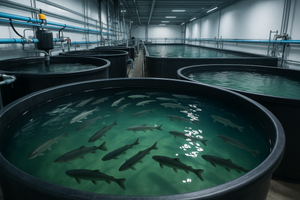
Used for water treatment in large-scale fish, shrimp and crayfish farming systems. Industrial models are able to process huge volumes of water, ensuring stability of water parameters.
Ornamental ponds and aquariums
Compact drum filters help keep water clean, improving aesthetics and the health of aquatic life.
In scientific laboratories
Used to create a stable environment for experiments with hydrobionts.
In fry farms
Ensure clean water for juvenile fish to promote rapid growth and reduce disease.
Drum filters are versatile equipment that can be easily adapted to different aquaculture needs. Whatever the specific needs of your farm, you will always be able to find a model that is perfect for you.