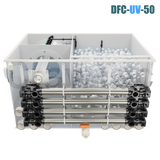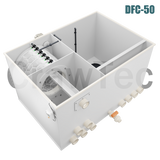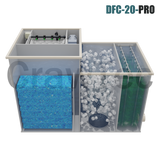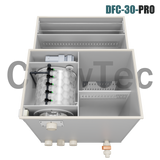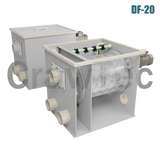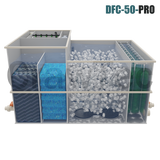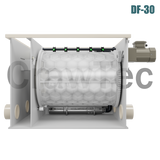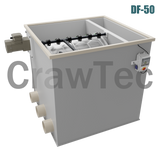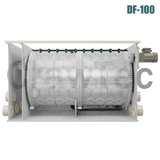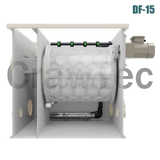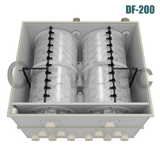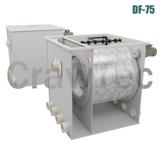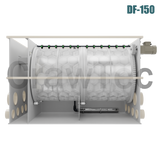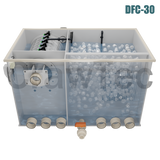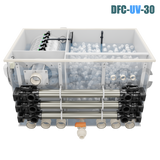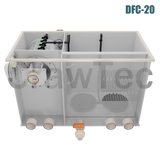


Principle of operation of the drum filter for RHWs
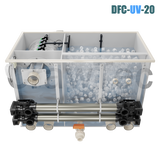
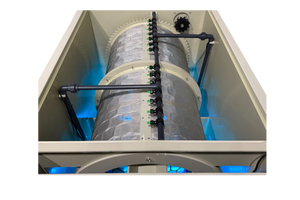
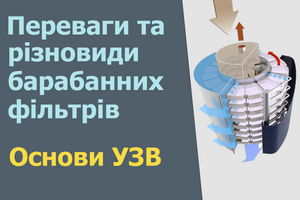
- A drum filter is a mechanical device that effectively purifies water in closed water supply systems (CWS). Its main task is to remove solid particles such as feed residues, biological waste and other suspended solids that inevitably accumulate during the breeding process of hydrobionts. The drum filter is based on a simple but reliable principle: the water from the system flows inside a rotating drum covered with a special mesh material. This material has a certain mesh size, which allows it to trap even small particles, ensuring a high degree of water purification.
- The filtration process begins when the contaminated water enters the drum. The rotation of the drum ensures that the water is evenly distributed over the surface of the mesh. The contaminant particles are trapped on the mesh and the clean water passes through and returns to the system.
- When the amount of dirt on the screen reaches a critical mass, a self-cleaning process is automatically initiated. The drum is fitted with nozzles that deliver water at high pressure. The water jets wash away the accumulated dirt from the screen surface, directing it into a special waste collection tray. This process takes place without stopping the filter operation, which allows to maintain constant operation of the RAS.
.png)
The advantage of the drum filter is its ability to automatically regulate the cleaning process. Modern models are equipped with water level sensors that detect a rise in level caused by clogging of the screen and initiate flushing. This makes the filter virtually self-contained, reducing the need for frequent maintenance.
The efficiency of a drum filter depends largely on the correct mesh size. For various RAS systems, screens with mesh diameters ranging from 30 to 80 microns are used. Smaller mesh sizes provide a high degree of filtration but may require more frequent cleaning.
The use of drum filters in an AHU can significantly improve water quality, which is key to the health and growth of fish, crayfish and shrimp. They prevent the accumulation of toxic substances such as ammonia and nitrite, creating optimal conditions for the hydrobionts.
Modern drum filters are characterised by high reliability and durability. They are made of corrosion-resistant materials such as stainless steel or plastic, which makes them resistant to water and chemicals. These devices find application not only in RASs, but also in aquarium farms, pond systems and even in industrial water treatment. Their versatility makes drum filters a popular choice for a wide variety of water treatment applications.
.png)
Advantages of using drum filters in an RHW system
Drum filters have become an indispensable element of modern closed-circuit water systems (CCWS), and their popularity can be easily explained by the numerous advantages they offer. These devices ensure efficient and stable operation of the system, creating favourable conditions for the breeding of hydrobionts.
High degree of water purification
One of the key advantages of drum filters is their ability to trap small particles of contaminants, which can be as small as 30-80 microns. This allows for effective removal of food residues, fish products and other suspended solids that can negatively affect water quality.
Automation of the cleaning process
Modern drum filters operate in a fully automatic mode. They are equipped with sensors that monitor the level of contaminants on the filter mesh. If necessary, a self-cleaning process is started, during which high-pressure nozzles flush contaminants into a special tray. This minimises human intervention and maintains stable operation of the system.
Saves time and resources
Thanks to automatic self-cleaning, drum filters require minimal maintenance. This saves staff time, lowers operating costs and reduces the need for frequent replacement of consumables.
Resistant to stress
Drum filters can handle large volumes of water, making them ideal for use in large RHW systems. They can operate continuously to ensure consistent water quality even under intensive fish, crayfish or shrimp farming conditions.
Durable and reliable
Manufactured from high quality materials such as stainless steel or corrosion-resistant plastic, drum filters are characterised by high durability. This makes them an attractive investment, as their service life far exceeds that of similar devices of other types.
Reduction of toxins in water
Removing solids from water prevents them from decomposing and forming toxic substances such as ammonia and nitrite. This helps maintain a healthy habitat for hydrobionts, improving their growth and reducing the risk of disease.
Flexible customisation
Drum filters can be customised to meet the specific needs of your farm. A variety of mesh sizes allows you to choose the best option depending on the type and number of hydrobionts to be grown.
Environmental friendliness
The use of drum filters contributes to the conservation of natural resources. They allow the reuse of treated water, reducing water consumption and minimising the discharge of contaminated wastewater into the environment.
Easy integration into the system
Drum filters are easy to install and integrate into existing ROMs. They take up minimal space and do not require complex installation.
Versatility of application
In addition to RASs, drum filters are used in pond systems, aquariums as well as in industrial water treatment. Their versatility makes them the ideal choice for a variety of applications.
Drum filters are not only a technical solution, but also the key to successful and profitable aquaculture. They provide stability, cleanliness and system reliability, making them an indispensable tool for modern farmers.